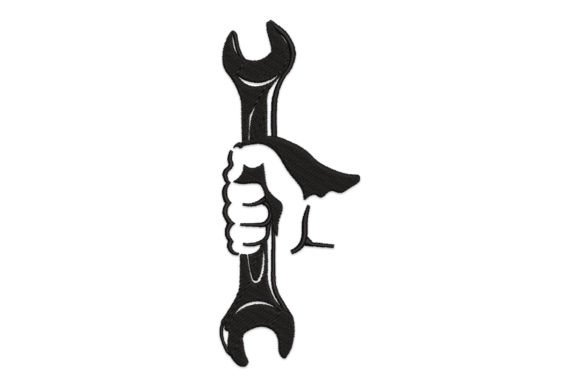
Wrench in Hand: A Craft Fair-Ready Embroidery Design
First Impression: Bold, Friendly, and Unmistakably Work-Coded
As an embroidery designer who’s prepped over 200 craft fair booths—and watched real customers pause, point, and reach for items mid-aisle—I’ll say it straight: Wrench in Hand lands with quiet confidence. It’s not flashy or cartoonish; it’s grounded, approachable, and just detailed enough to feel intentional. The title alone signals purpose—this isn’t a novelty gag design. It reads as modern-rustic, with subtle workwear charm that fits seamlessly into farmhouse kitchens, maker studios, and small-town hardware shops alike. Customers don’t need to “get” a joke to connect—they recognize competence, care, and craftsmanship in the shape of a well-drawn wrench held firmly. That’s rare air at a crowded handmade market.
Where Wrench in Hand Shines on Real Craft Fair Products
This machine embroidery design thrives where utility meets personality. On a heavyweight canvas tote bag? Perfect—it anchors the side panel without overwhelming, and the clean lines photograph crisply for Etsy listings. On a denim apron? Even better. Positioned just above the pocket, Wrench in Hand becomes a signature detail that tells shoppers, “This wasn’t mass-produced—it was made by someone who knows tools.”
For tea towel embroidery, it holds up beautifully at 3.5–4 inches wide—large enough to read from three feet away, small enough to leave room for folded hems and hanging loops. As an embroidered patch? Highly effective. Its balanced proportions and defined silhouette make it easy to peel-and-stick onto jackets, tool rolls, or market bags without looking busy or cramped. On caps, test placement carefully—the curve can distort fine edges—but centered on the front panel (not too high), it reads cleanly and adds instant credibility to a vendor’s brand.
It also works surprisingly well on small pouches and pillow covers. Unlike overly intricate motifs, Wrench in Hand doesn’t compete with fabric texture or pattern. Its solid outlines and moderate stitch density keep it legible even on terry cloth towels or linen blends.
What Makes It Sell—And What Requires Caution
At a craft fair, attention is fleeting. Wrench in Hand wins because it’s instantly readable at booth distance, emotionally resonant for tradespeople, makers, teachers, and DIYers—and versatile enough to cross gender and age lines. It feels like a small luxury: handmade, precise, and quietly proud.
But practicality matters. Before stitching your first batch, inspect the embroidery file closely. Look for dense stitch areas near the wrench jaw or handle end—these can cause puckering on lightweight cotton or textured tea towels unless stabilized properly. Tiny details (like subtle knurling or narrow grip lines) may blur on dark fabric or at sizes under 2.75 inches. If your version includes lettering (“Wrench in Hand” or similar), confirm readability at 3 inches wide—small caps or thin fonts often vanish on curved surfaces like caps or pouch seams.
Also note: thick fabrics (like duck canvas or quilted market bags) demand firm cutaway stabilizer, while stretchy knits require tear-away + topping. Always run a test on scrap fabric matching your final product—especially if using variegated thread or metallics, which change perceived contrast.
Booth Impact, Brand Strength, and Buyer Engagement
A single well-executed Wrench in Hand sample—say, on a navy apron beside a matching tea towel and a leather patch—creates cohesion across your display. It subtly reinforces your shop’s identity: skilled, reliable, hands-on. Buyers don’t just buy the item; they buy into the story behind it. That’s why this design works so well for small shop products and commercial embroidery—it carries weight without shouting.
Online, Wrench in Hand performs strongly in printable mockups. Its balanced negative space allows clean background integration, and its moderate complexity translates well in thumbnail views. For Etsy sellers, pairing it with lifestyle photos (e.g., a hand holding the wrench-towel while stirring batter) boosts conversion far more than flat studio shots.
Production Notes Every Embroidery Designer Should Run Through
- Test before you commit: Stitch Wrench in Hand on scrap fabric identical to your final product—including wash/dry cycles if applicable.
- Check thread contrast: Light thread on dark fabric? Verify coverage. Dark thread on light? Ensure no white underlay shows through.
- Review spacing and hoop size: Does the design fit comfortably within your standard hoop? Are margins generous enough for re-hooping multiple items?
- Inspect stitch density: High-density fills may require slower speed or heavier stabilizer—especially on textured surfaces.
- Use the right stabilizer: Cutaway for stability on knits and towels; tear-away for crisp cottons; topping for looped or napped fabrics.
- Create at least one real mockup: Not digital—actual stitched product, photographed in natural light, displayed as it would be at a fair.
- Compare fabric colors: A navy canvas vs. olive twill changes how the wrench’s metallic tone reads—adjust thread accordingly.
- Confirm commercial licensing: Since Wrench in Hand is marketed for sewn goods, double-check your license permits finished product sales—not just personal use.
Final Thought: A Quiet Standout in a Noisy Market
In a sea of florals, quotes, and cutesy animals, Wrench in Hand stands apart—not by being louder, but by being truer. It respects the viewer’s intelligence, celebrates skill without pretense, and translates effortlessly across product types. It’s not just another embroidery file. It’s a conversation starter, a quality signal, and a repeat-purchase trigger for customers who value authenticity in their handmade product choices. For craft fair sellers, Etsy sellers, and boutique makers building a recognizable line, Wrench in Hand isn’t filler—it’s foundation.