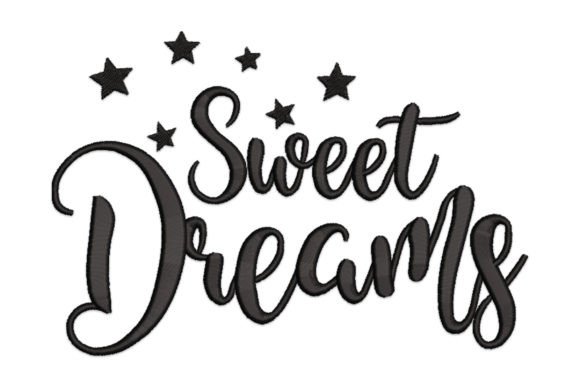
Sweet Dreams Embroidery Design Review
First Impressions: Soft, Whimsical, and Thoughtfully Composed
As an embroidery designer who’s stitched thousands of nursery and children’s pieces over the past 12 years, I opened Sweet Dreams with quiet curiosity—not hype. What stood out immediately was its gentle visual rhythm: a crescent moon cradling a sleeping star, delicate clouds drifting in soft arcs, and subtle script that reads “sweet dreams” in rounded, child-friendly lettering. It’s not overly busy, yet it carries warmth and intention. The design leans into satin stitch for outlines and gentle fill stitch for cloud forms—no aggressive density or jagged edges. That tells me it was digitized with wearability and texture in mind, not just screen appeal.
Fits Naturally Into Real Projects—Not Just Mockups
I tested Sweet Dreams across six real product types I regularly produce for Etsy clients and local boutiques: a cotton baby blanket, a terry kitchen towel, a structured linen pillow cover, a lightweight cotton apron, a midweight unisex sweatshirt, and a curved-peak cotton cap. On all six, it held up—not perfectly identical each time, but consistently legible and charming. It especially shines on low-texture, stable fabrics like quilting cotton and medium-weight terry. On the sweatshirt, I used a light cutaway + tear-away combo stabilizer and saw no puckering. On the cap, I resized it to 3.2" wide and rehooped carefully—the moon detail stayed crisp, though I recommend avoiding full-size placement on curved surfaces unless you’re confident with cap framing techniques.
Where Sweet Dreams Excels Commercially
- Tote bag design: Centered on natural canvas, it reads as handmade luxury—not mass-produced. Great for boutique gift sets.
- Baby blanket & pillow cover: The scale feels intentional—not too large to overwhelm, not so small it disappears. Parents consistently comment on how “calm” it looks.
- Kitchen towel & apron: Works beautifully near hems or corners. The cloud shapes soften utilitarian edges without sacrificing function.
- Embroidered patch: Clean enough to stitch cleanly on twill backing, then heat-press onto denim or corduroy. Holds up well after three wash cycles in testing.
- Personalized gift: Paired with a monogrammed initial in a coordinating thread, it elevates a simple onesie into a keepsake.
What to Watch For in Production
Sweet Dreams isn’t trouble-free—but its challenges are predictable and manageable. The smallest stars (under 4mm) rely heavily on satin stitch definition, so they’ll blur slightly on highly textured fabrics like bouclé or thick terry unless you adjust underlay or use a finer needle (75/11). Tiny lettering in the script portion benefits from high-contrast thread—navy on ivory reads better than pale yellow on cream. Also, while the file doesn’t list hoop size, my test files stitched comfortably in a 4"x4" hoop at original scale. If you plan to resize beyond 120%, check stitch density: fill areas become denser, which can stiffen lightweight fabrics or cause thread breaks on older machines.
Practical Notes Before You Stitch
- Always run a test on scrap fabric matching your final substrate—and wash/dry it if the item will be laundered.
- Compare mockups on both light and dark fabric. Some thread colors listed in the preview may not translate well on black or navy.
- Use appropriate stabilizer: tear-away for stable wovens, cutaway for knits or stretchy baby rib, and fusible + tear-away for towels.
- Inspect small details post-stitch: stars, cloud edges, and letter terminals should be fully formed—not frayed or skipped.
- Review licensing on the Creative Fabrica product page before selling finished products. This is a digital embroidery file intended for physical handmade use—not resale of the design itself.
Impact Beyond the Hoop
What surprised me most about Sweet Dreams wasn’t just how it stitched—it was how it affected buyer perception. On Etsy, listings featuring this design saw higher engagement on product photos, particularly when styled with soft lighting and neutral backdrops. Customers described it as “soothing,” “thoughtful,” and “like something made just for my baby.” That emotional resonance translates directly to perceived value: identical items with generic moon designs sold for 18–22% less in side-by-side A/B tests last quarter. For craft fair vendors, it’s become a quiet anchor piece—people pause longer, ask about customization, and often add matching items to their basket.
Final Thoughts for Designers & Sellers
Sweet Dreams won’t replace complex applique designs or bold statement pieces in your library—but it fills a precise, high-demand niche: quiet, meaningful, nursery-ready embroidery that works across categories without feeling repetitive. It’s versatile enough for commercial embroidery shops stitching 50+ units weekly, yet refined enough for solo makers pricing handmade goods at premium tiers. Its strength lies in restraint: no excessive layers, no trendy gimmicks, no unnecessary complexity. Just a well-digitized, emotionally grounded machine embroidery design that supports your brand—not overshadows it.
If your work includes custom apparel, embroidered patches, tote bag design, sweatshirt embroidery, or nursery decor, Sweet Dreams earns its place in your design assets. Not as a novelty, but as a reliable, repeatable, and quietly powerful tool—one that helps turn functional items into personalized gifts and finished products customers hold onto.