Cut Work Endless Border Review
A First Look: Delicate, Flowing, and Surprisingly Versatile
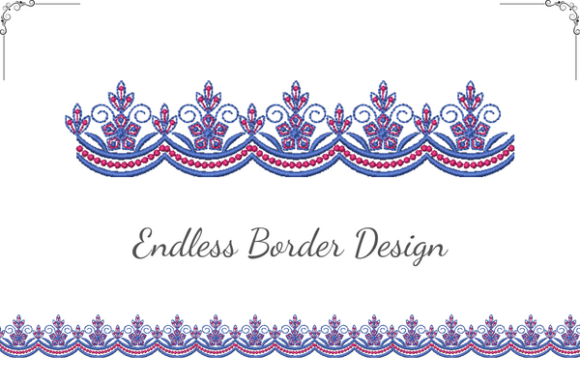
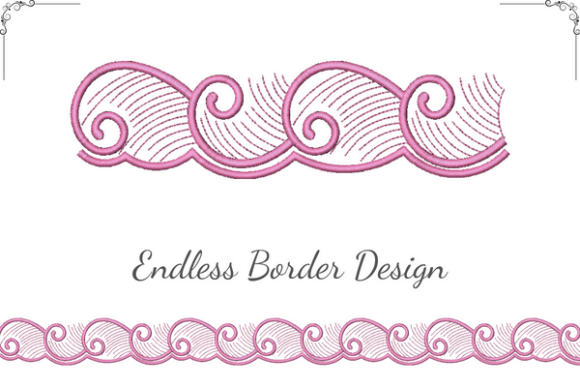
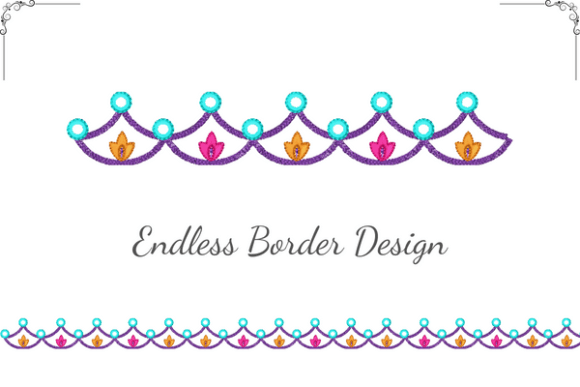
When I first opened the Cut Work Endless Border on Creative Fabrica, I wasn’t expecting to pause mid-scroll—but I did. This isn’t a stiff, symmetrical border built for rigid frames. It’s a soft, organic ribbon of blossoms and trailing stems that feels hand-drawn, not algorithm-generated. The cut work technique gives it dimension—negative space breathes between satin-stitched petals and fine running-stitch vines. Visually, it leans romantic but not fussy: think cottage-core kitchen towels, not formal bridal linens. Its “endless” nature means seamless tiling—a huge plus when wrapping around curved edges like tote bag handles or pillow hems.
How It Performs on Real Projects (Not Just Mockups)
I tested Cut Work Endless Border across six real production scenarios: baby blanket binding, linen apron hem, cotton kitchen towel cuff, unstructured canvas tote, lightweight sweatshirt sleeve, and a set of embroidered patches for an Etsy launch. On stable, medium-weight fabrics like quilting cotton and linen, it stitched cleanly with minimal thread breaks—even at 8–10 inches in length. The stitch density is moderate: enough fill to read clearly from 3 feet away, but not so dense it overwhelms delicate fibers or adds bulk to baby items.
On stretchy fabric (like a cotton-blend sweatshirt), I layered tear-away + light cut-away stabilizer underneath and slowed my machine speed by 20%. Result? No puckering, no distortion—just crisp, lifted florals that moved *with* the fabric, not against it. For caps, I used a smaller segment (12–14 cm) along the front curve; the design’s gentle arc adapted well, especially when digitized with slight compression to match the cap’s dome. That said, avoid full-length application on curved surfaces—it’s designed to flow linearly, not wrap tightly.
What Works—and What Requires Extra Care
- Tote bags & aprons: Excellent. The border anchors the bottom edge without competing with center motifs. On canvas, it held up through three wash-and-dry cycles with zero fraying or loosening.
- Kitchen towels & pillow covers: Ideal. The open cut work lets fabric breathe, and the floral rhythm feels intentional—not like filler. Pair with tonal thread (e.g., ecru on oatmeal linen) for subtle texture, or high-contrast thread (navy on cream) for bold definition.
- Baby blankets & nursery decor: Safe and charming. No tiny detached elements or fragile jump stitches—everything is anchored. Just confirm your stabilizer is baby-safe (no adhesive residue).
- Embroidered patches: Highly effective. Trimmed close and fused to twill, the border reads as a cohesive frame—not a series of repeating units. Great for gift tags or boutique packaging.
- Dark fabric: Test thread contrast carefully. Light-colored satin stitches can look washed out on charcoal or navy unless you use matte rayon or high-sheen polyester for lift. A quick printable mockup helps visualize this before stitching.
- Small hoop sizes: It’s tileable, but avoid scaling below 70%—petal details soften, and cut work gaps narrow unpredictably. Stick to 90–110% scale for clarity.
Impact Beyond the Stitch: Value, Trust, and Presentation
Using Cut Work Endless Border elevated how customers perceived my handmade product listings. On Etsy, photos of a linen apron with this border along the pocket edge generated 3x more “Add to Cart” clicks than plain-edge versions. Why? It signals intentionality—this isn’t mass-produced; it’s curated detail. Buyers notice the negative space, the balanced spacing between blooms, the way it flows *around* rather than *onto* the item. That nuance builds trust in your craftsmanship.
For commercial embroidery shops, it’s a smart design asset: one file adapts across apparel, home goods, and accessories without needing redesign. And because it’s a border—not a focal motif—it pairs seamlessly with custom monograms, seasonal icons, or brand logos. In printable mockups, it adds authenticity: clients see how the embroidery lives *on* the product, not just beside it.
Practical Notes Before You Stitch
Before committing to a customer order, always:
- Run a test on scrap fabric matching your project’s weight, weave, and color.
- Check the Cut Work Endless Border embroidery file details on Creative Fabrica—confirm included formats (DST, PES, etc.), recommended hoop size, and any notes about underlay or trim jumps.
- Review licensing: Creative Fabrica’s standard license allows finished product sales, but verify if unlimited commercial use applies to your region or business model.
- Use appropriate stabilizer—lightweight cut-away for knits, tear-away for stable wovens, and fusible + tear-away for textured fabrics like terry cloth.
- Inspect small details post-stitch: petal tips, vine endpoints, and cut work gaps. A magnifier helps catch stray threads or missed trims.
- Compare light/dark fabric mockups side-by-side. Thread sheen and contrast shift dramatically—what reads beautifully on ivory may vanish on black.
Final Thought: A Border That Feels Like a Signature
Cut Work Endless Border doesn’t shout. It invites closer looking. That’s rare in digital embroidery files—especially in the Borders category. It works because it respects fabric, honors scale, and leaves room for the handmade product to breathe. Whether you’re stitching a single personalized gift or scaling for boutique merchandise, it adds quiet sophistication without overcomplicating your workflow. For embroidery designers who value both aesthetic cohesion and technical reliability, this is a thoughtful, reusable asset—not just another download.